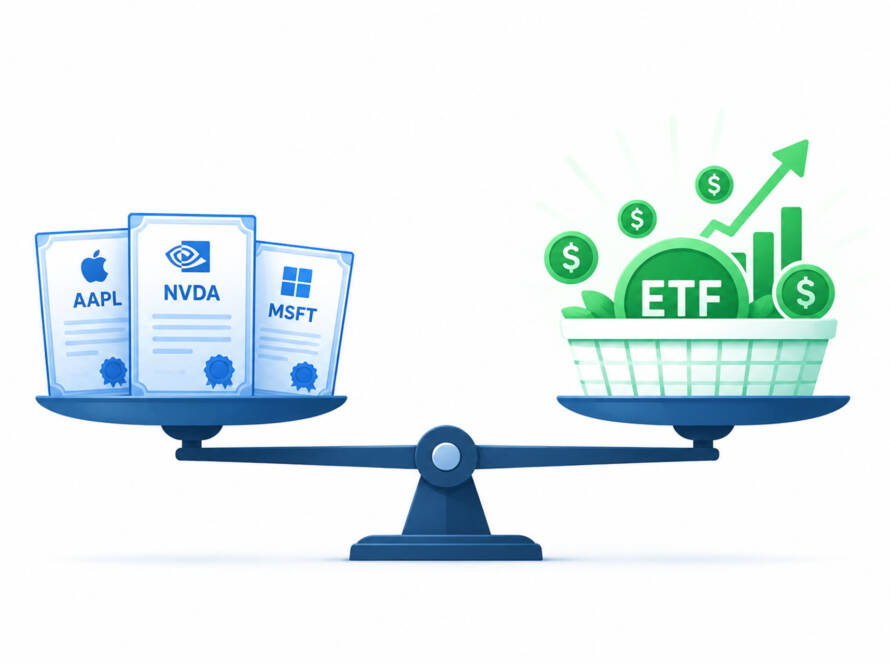
If you’ve ever wanted to invest in the stock market but felt overwhelmed by picking individual stocks, you’re not alone. That’s exactly where ETF investing comes in. What is ETF investing? Simply put, it’s a way to buy a basket of investments — stocks, bonds, or commodities — all in one single trade. It’s one of the most beginner-friendly strategies in personal finance, and millions of Americans use it to build long-term wealth.
This guide breaks down everything you need to know: how ETFs work, why they matter, real examples, and the mistakes to avoid.
What Is an ETF?
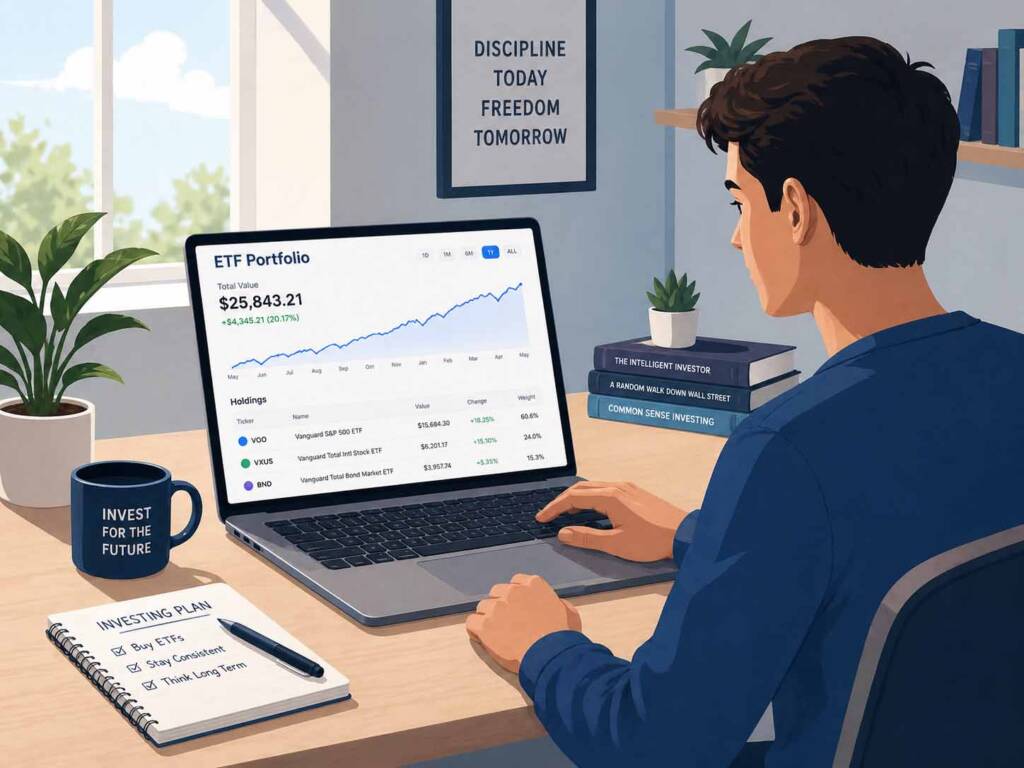
ETF stands for Exchange-Traded Fund. Think of it like a shopping cart at a grocery store. Instead of buying one apple, you fill the cart with apples, oranges, and bananas all at once. An ETF does the same thing — it holds a collection of assets, and you buy into all of them with a single purchase.
Unlike mutual funds, ETFs trade on stock exchanges just like regular stocks. You can buy and sell them throughout the trading day at market prices. This flexibility is a big reason they’ve grown so popular.
According to BlackRock (iShares), ETFs now hold over $10 trillion in global assets. That number tells you this isn’t a niche product — it’s mainstream investing. You can also find a solid foundational overview in Investopedia’s ETF guide if you want to go deeper on the mechanics.
Why ETF Investing Matters for Beginners
For most new investors, the hardest part is knowing where to start. Picking individual stocks requires research, time, and a fair amount of expertise. One wrong pick can hurt your portfolio significantly.
ETFs remove much of that pressure. Here’s why they matter:
- Instant diversification — One ETF can hold hundreds of companies
- Lower cost — Expense ratios are often below 0.20%
- Transparency — You can see exactly what’s inside the fund
- Accessibility — Many ETFs cost under $100 per share to start
- Passive income potential — Many ETFs pay dividends quarterly
Vanguard, one of the most trusted names in index investing, has long championed low-cost ETFs as a core building block for everyday investors. Their research consistently shows that low fees compound into massive savings over decades.
See our guide on How to Start Investing with $50
How ETF Investing Works (Step by Step)
Understanding the mechanics makes it far less intimidating. Here’s how the process works from start to finish.
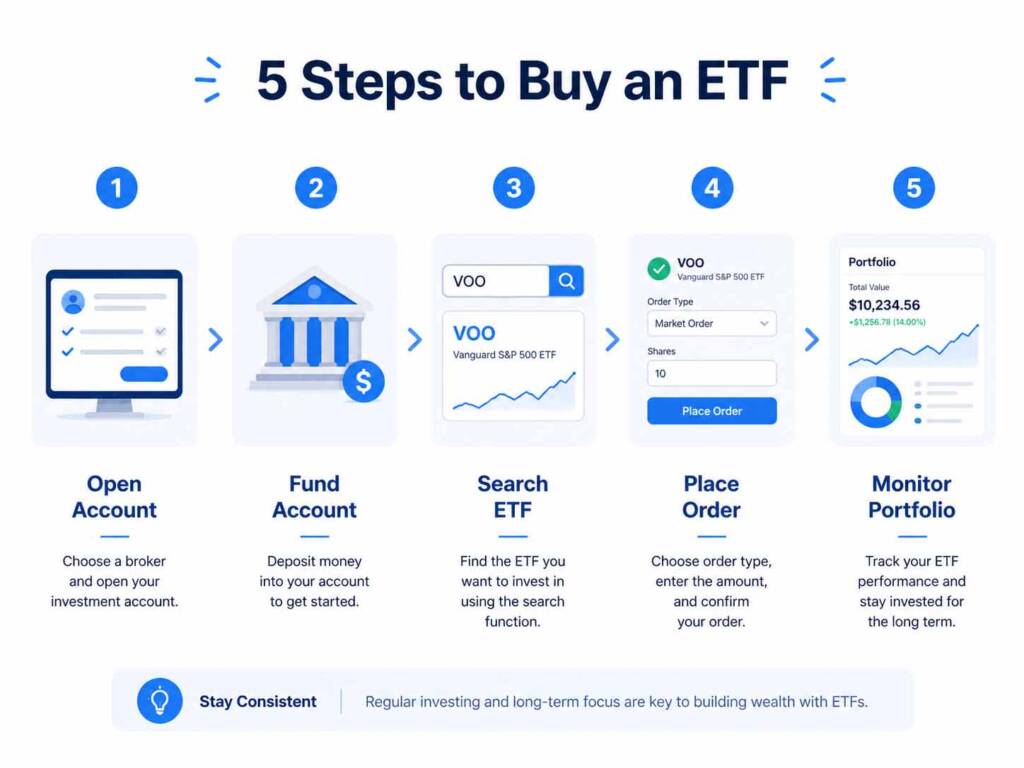
Step 1: Open a brokerage account
You’ll need an account at a broker like Fidelity, Charles Schwab, or Robinhood. Most accounts are free to open and have no minimum balance requirements.
Step 2: Fund your account
Transfer money from your bank. Even $50 or $100 is enough to get started with many ETFs.
Step 3: Search for an ETF
Browse ETFs by category — U.S. stocks, international markets, bonds, real estate, or sectors like technology. Use your broker’s search tool or a screener at ETF.com or Investopedia’s ETF screener.
Step 4: Place a buy order
Enter the ETF’s ticker symbol (for example, SPY for the S&P 500) and choose how many shares to buy. Set a market order to buy at the current price, or a limit order to set your max price.
Step 5: Monitor and rebalance
Check your portfolio periodically. Most long-term investors rebalance once or twice a year to keep their target allocations on track.
That’s it. The process is genuinely straightforward once you’ve done it once.
A Real-World ETF Investing Example
Let’s say you invest $1,000 in VTI — the Vanguard Total Stock Market ETF. This single ETF gives you exposure to over 3,700 U.S. companies, from large-cap giants like Apple and Microsoft down to small-cap growth stocks.
Instead of researching 3,700 companies yourself, you own a tiny slice of all of them. When the overall U.S. market grows, your investment grows with it.
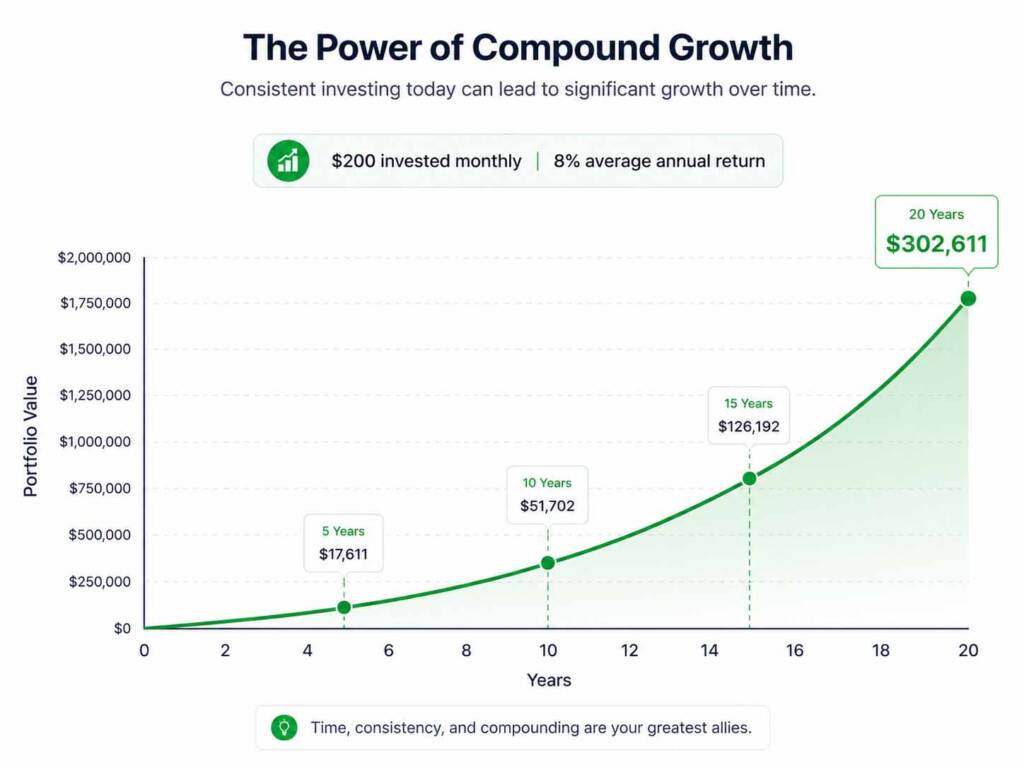
Now imagine you invest $200 per month consistently over 20 years. Assuming a historical average annual return of around 7% (after inflation), you’d be looking at a portfolio worth roughly $104,000 — from contributions totaling only $48,000. The rest is compound growth doing its job.
This isn’t a guarantee. Markets fluctuate, and past performance doesn’t predict future results. However, the math of consistency plus diversification is hard to argue with. The SEC’s compound interest calculator is a great free tool to model your own numbers.
Pros and Cons of ETF Investing
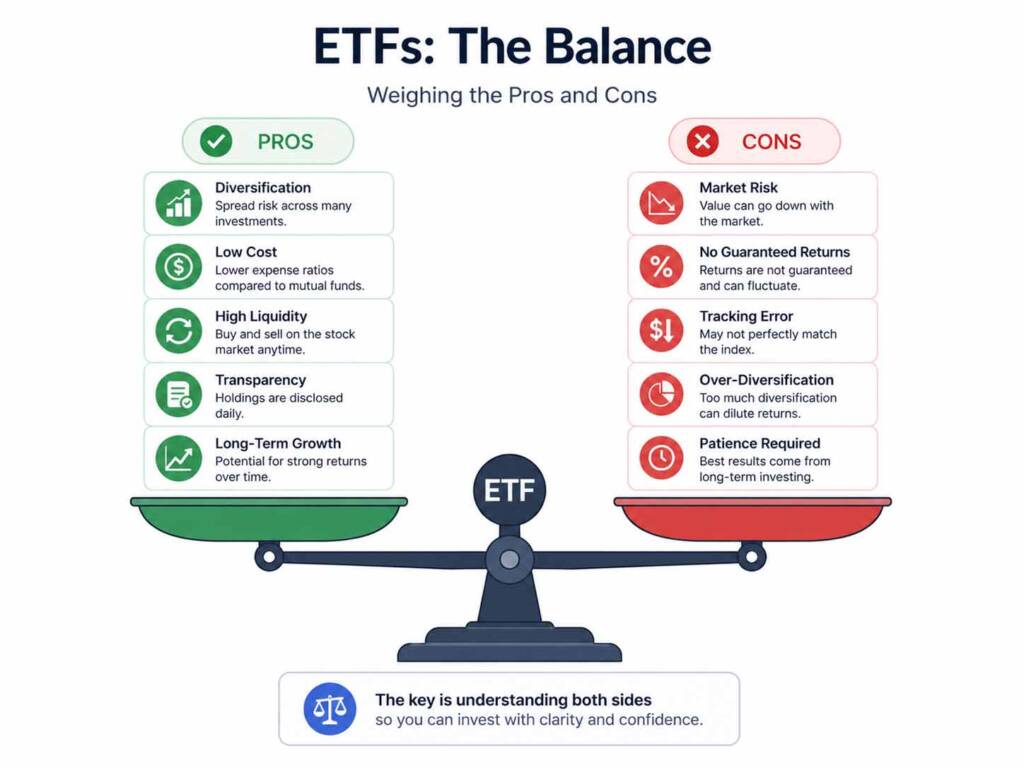
No investment strategy is perfect. Here’s an honest look at both sides.
Pros
- Diversification without the complexity of stock picking
- Low expense ratios compared to actively managed mutual funds
- Tax efficiency — ETFs typically generate fewer taxable events
- Easy to buy and sell during market hours
- Wide variety — sector ETFs, bond ETFs, dividend ETFs, international ETFs
Cons
- You still carry market risk — if the market drops, so does your ETF
- Some niche or leveraged ETFs carry significantly higher risk
- You can’t outperform the index you’re tracking (by design)
- Overtrading ETFs defeats the purpose of a long-term strategy
- Not all ETFs are created equal — expense ratios and liquidity vary
Common Mistakes to Avoid
Even with a simple strategy, beginners make avoidable errors. Watch out for these.
1. Chasing hot sector ETFs
Technology or crypto ETFs may look exciting after a big rally. However, buying high is a fast way to lose money when the trend reverses. Stick to a long-term plan.
2. Ignoring expense ratios
A 1% annual fee sounds small. Over 30 years, it can eat tens of thousands of dollars from your portfolio. Choose ETFs with expense ratios below 0.20% when possible. FINRA’s Fund Analyzer tool lets you compare fee impact side by side.
3. Over-diversifying with too many ETFs
Owning 15 ETFs that all hold similar stocks doesn’t reduce your risk — it just creates confusion. A simple three-fund portfolio is often more effective.
4. Panic selling during market dips
Markets correct regularly. Selling during a downturn locks in your losses. Most experienced investors stay the course or buy more during dips.
5. Not having a clear goal
Are you investing for retirement, a home, or financial independence? Your goal shapes which ETFs make sense and how long you should hold them.
Frequently Asked Questions
How much money do I need to start ETF investing?
Most brokers let you start with any amount. Some ETFs trade for under $20 per share. Fractional shares are also available at brokers like Fidelity and Schwab, so you can invest with as little as $1.
Are ETFs safer than individual stocks?
They carry less concentration risk because they’re diversified. However, they’re not risk-free. An ETF tracking the S&P 500 will still fall during a broad market downturn.
What’s the difference between an ETF and a mutual fund?
Both hold a basket of assets. The key difference is that ETFs trade on exchanges like stocks throughout the day, while mutual funds are priced once at the end of each trading day. The SEC has a clear breakdown of both structures.
Do ETFs pay dividends?
Many do. Dividend ETFs like VYM or SCHD collect dividends from the companies they hold and distribute them to investors, typically every quarter.
Is ETF investing good for retirement accounts?
Absolutely. ETFs work very well inside IRAs and 401(k)s. Tax-advantaged accounts amplify the benefits of long-term compounding even further. The IRS IRA overview page explains the contribution limits and tax benefits in plain language.
Conclusion
What is ETF investing? At its core, it’s one of the most practical and accessible tools available to everyday investors. You don’t need to be a financial expert, and you don’t need a large sum of money to start.
By understanding how ETFs work, choosing low-cost options, and staying consistent, you give your money a real chance to grow over time. The strategy won’t make you rich overnight — but it’s built for the long game. And for most investors, that’s exactly what wins.
See our guide on The Best ETFs for Beginners in 2026
Disclaimer: This article is for educational purposes only and does not constitute financial advice. All investing involves risk, including the possible loss of principal. Past performance is not indicative of future results.